

Hey there! As a supplier of socket weld joints, I often get asked about the corrosion resistance of these nifty little components. So, I thought I'd sit down and write a blog post to share what I know.
First off, let's talk about what a socket weld joint is. It's a type of pipe fitting that's used to connect pipes together. The pipe is inserted into a socket in the fitting, and then welded around the outside. This creates a strong, leak - proof connection. Socket weld joints come in different shapes and sizes, like the Socket Weld Cross Joint, Socket Weld Reducing Joint, and Socket Weld Reducing Cross.

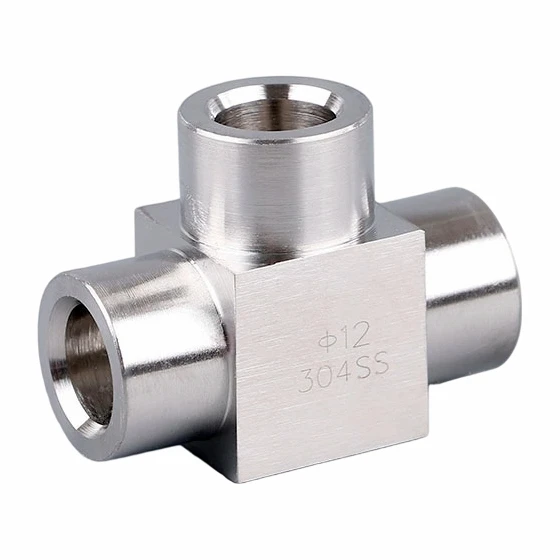
Now, onto the big question: what is the corrosion resistance of a socket weld joint? Well, it depends on a few factors.
Material Matters
The material of the socket weld joint plays a huge role in its corrosion resistance. Common materials used for socket weld joints include stainless steel, carbon steel, and alloy steel.
Stainless steel is a popular choice because it has excellent corrosion resistance. It contains chromium, which forms a thin, protective oxide layer on the surface of the metal. This layer acts as a barrier, preventing oxygen and moisture from reaching the metal beneath and causing corrosion. For example, 304 and 316 stainless steels are widely used in socket weld joints. 316 stainless steel has a higher molybdenum content than 304, which gives it even better resistance to pitting and crevice corrosion, especially in environments where there are chlorides present, like in coastal areas or in some industrial processes.
Carbon steel, on the other hand, is more prone to corrosion. It doesn't have the same protective oxide layer as stainless steel. However, it can be coated or treated to improve its corrosion resistance. For instance, carbon steel socket weld joints can be galvanized, which involves coating the steel with a layer of zinc. The zinc acts as a sacrificial anode, corroding in place of the steel and providing some protection.
Alloy steel is a combination of different metals, and its corrosion resistance can vary depending on the specific alloying elements. Some alloy steels are designed to have enhanced corrosion resistance in certain environments, such as high - temperature or acidic conditions.
Environmental Conditions
The environment in which the socket weld joint is used also has a significant impact on its corrosion resistance.
In a dry, indoor environment, the risk of corrosion is relatively low. However, in outdoor environments, especially in areas with high humidity, saltwater, or industrial pollutants, the chances of corrosion increase. For example, if a socket weld joint is installed near the ocean, the salt in the air can accelerate the corrosion process. The salt particles can break down the protective oxide layer on the metal surface, allowing oxygen and moisture to reach the metal and cause rusting.
In industrial settings, chemicals and acids can also pose a threat to the corrosion resistance of socket weld joints. If the joint is exposed to acidic solutions, the acid can react with the metal and cause it to corrode. Some industries, like the chemical processing industry, need to use socket weld joints made from materials that are specifically resistant to the chemicals they handle.
Welding Quality
The quality of the welding process can affect the corrosion resistance of a socket weld joint. A poorly welded joint can have defects such as cracks, porosity, or incomplete fusion. These defects can create areas where corrosion can start and spread.
When welding, it's important to use the correct welding technique and filler material. The filler material should be compatible with the base material of the socket weld joint to ensure a strong and corrosion - resistant bond. For example, when welding stainless steel socket weld joints, a stainless steel filler rod with the appropriate composition should be used.
Proper pre - cleaning and post - welding treatment are also crucial. Before welding, the surfaces of the pipe and the fitting should be clean and free of dirt, oil, and rust. After welding, the joint may need to be passivated, which is a process that removes any free iron from the surface and restores the protective oxide layer on stainless steel.
Maintenance and Inspection
Regular maintenance and inspection can help to extend the corrosion resistance of socket weld joints.
Inspecting the joints periodically for signs of corrosion, such as rust spots, discoloration, or pitting, can allow for early detection and repair. If corrosion is detected early, it may be possible to clean the joint and apply a protective coating to prevent further damage.
Proper maintenance can also include keeping the area around the joint clean and dry. Removing any dirt, debris, or standing water can reduce the risk of corrosion. In some cases, it may be necessary to replace a socket weld joint if the corrosion is too severe.
How to Choose the Right Socket Weld Joint for Corrosion Resistance
When choosing a socket weld joint, you need to consider the specific requirements of your application.
First, think about the environment in which the joint will be used. If it's a harsh environment with high humidity, saltwater, or chemicals, choose a material with high corrosion resistance, such as stainless steel or a specialized alloy steel.
Next, consider the quality of the joint. Look for a supplier who has a good reputation for producing high - quality socket weld joints. Check the welding standards and procedures they follow to ensure that the joints are well - made.
Finally, don't forget about maintenance. Make sure you have a plan in place to inspect and maintain the socket weld joints regularly. This will help to ensure their long - term performance and corrosion resistance.
If you're in the market for socket weld joints and want to learn more about our products, we're here to help. We offer a wide range of socket weld joints made from different materials to suit various applications. Whether you need a Socket Weld Cross Joint, Socket Weld Reducing Joint, or Socket Weld Reducing Cross, we can provide you with high - quality products.
If you have any questions or want to discuss your specific needs, feel free to reach out to us. We're always happy to have a chat and help you find the right socket weld joints for your project.
References
- ASME B16.11: Forged Fittings, Socket - Welding and Threaded.
- ASTM A312: Standard Specification for Seamless, Welded, and Heavily Cold Worked Austenitic Stainless Steel Pipes.
- ASTM A105: Standard Specification for Carbon Steel Forgings for Piping Applications.